Section 1: The Beginning
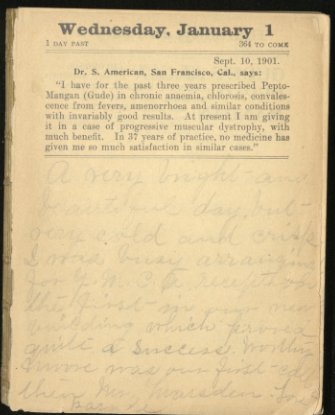
Florence Barber began her diary on January 1, 1902, at the age of forty-three. “A very bright and beautiful day, but very cold and crisp,” she writes. “I was busy arranging for Y.M.C.A. reception the first in our new building which proved quite a success. Worthy Moore was our first caller then Mr. Marsden Town parade.”
It isn’t entirely clear why Barber chose to begin keeping a diary. Was she inspired by the opening of the new Y.M.C.A. building, an event for which she had tirelessly fundraised and planned as president of the Women’s Auxiliary? Was it the Emancipation Day parade, a celebration of African American history as well as new beginnings? Perhaps keeping a diary wasn’t new to her at all. She might have filled dozens of volumes over her lifetime, with this single year’s diary surviving as the lone witness to her daily life.
Whatever her reasons for beginning her 1902 diary, its entries provide a window onto the life of a middle-class Black woman living in Norfolk, Virginia, at the turn of the century. To read this diary and to understand it, we need to take a step back to look at who Florence Barber was, the world she lived in, and the material diary itself.
Section 2: Florence Barber and Her World
In 1902, Florence Stanton Barber lived in Norfolk, Virginia, with her husband, Dr. Philip Lewis Barber, one of the first Black physicians to practice medicine in the city, and their adopted daughter, Alma.
Florence, or “Flora,” as she seems to have been called by friends, was a busy woman. She took care of her family and their home, gave piano lessons, raised chickens and sold eggs, served as president of the Women’s Auxiliary, and participated actively in clubs, many of which were associated with St. John’s African Methodist Episcopal Church on Bute Street in Norfolk. She had previously worked as a teacher and would return to the classroom soon after the conclusion of the diary in late 1902. She and her husband were important figures in Black Norfolk, leaders who saw themselves as having a responsibility to the health and uplift of their community.
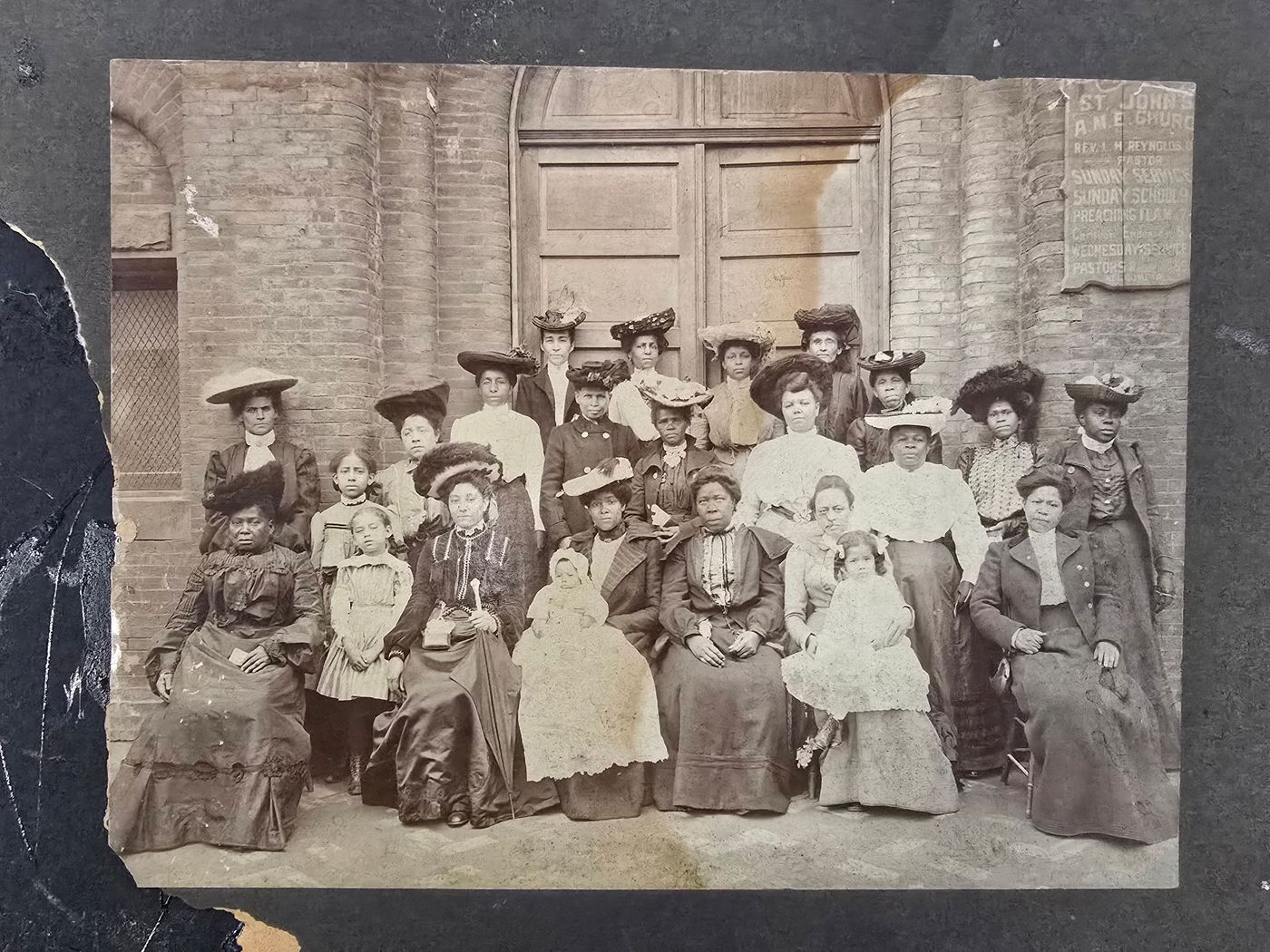
Nearly forty years after the end of the Civil War, Norfolk, Virginia, had a population of about 47,000 people. Approximately 43% of them were African American. While many of these families had lived in the city for generations, others, like the Barbers, had moved there from elsewhere, drawn by increased economic growth and institution building among the Black population.
As in many states after the end of Reconstruction, however, Virginia capitalized on the legalization of separate-but-equal treatment under the law in the 1896 Plessy v. Ferguson Supreme Court case and the 1898 Williams v. Mississippi case. On January 25, 1900, for example, the Virginia Senate legalized discrimination on trains, creating separate cars for Black and white passengers. In 1902, a Constitutional Convention was called to reinstate white supremacy in the state of Virginia. The new constitution used poll taxes, literacy tests, and grandfather clauses (exempting men whose grandfathers were able to vote prior to the Civil War from poll taxes and literacy tests) to prevent African American men from voting. Black participation in elections fell drastically and hard-won Black civil rights in Virginia were endangered.
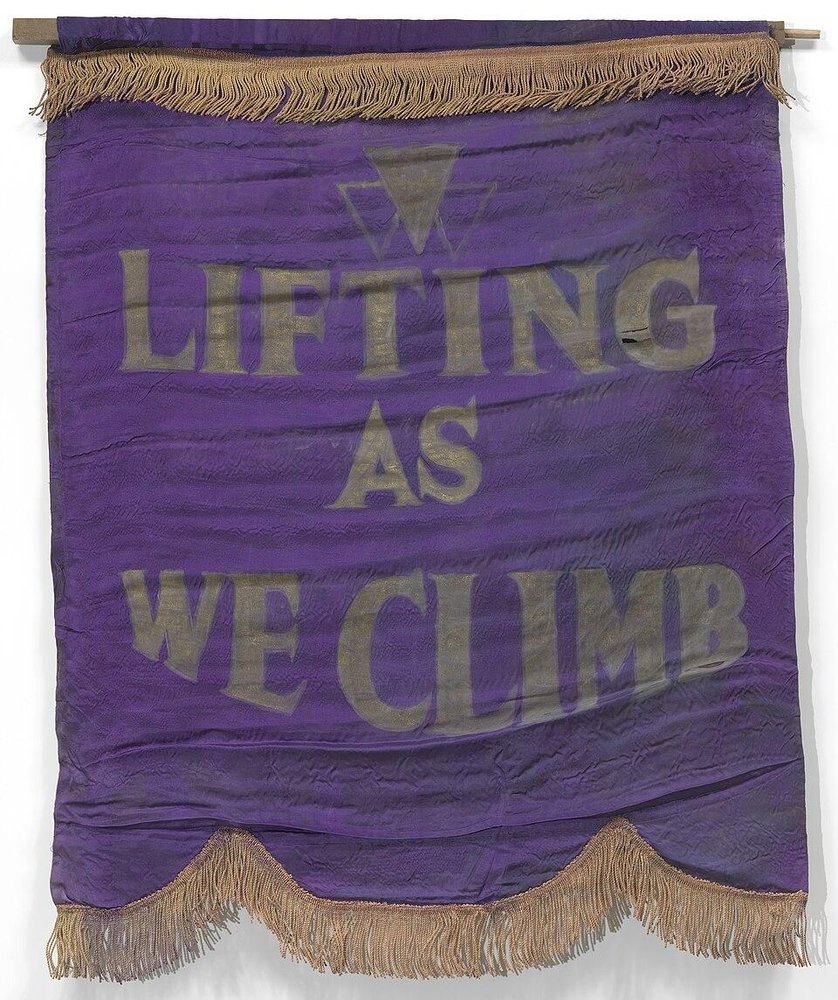
Amidst this backdrop, Barber’s diary entries capture the daily rhythms of life in Black Norfolk. They also reveal her leadership in clubs and organizations affiliated with St. John’s A.M.E. Church and the Women’s Auxiliary of the Norfolk Y.M.C.A Such activities joined her nationally with a wave of institution building, political organizing, and social gospel we now call the clubwomen’s movement. Beginning in the late nineteenth century and stretching into the early twentieth century, Black women participated in interracial clubs around shared interests and values and also formed their own when faced with their colleagues’ covert or overt racism.
The Mid-Atlantic region saw a great deal of activity related to the Black women’s club movement, such as the creation of the National Association of Colored Women’s Clubs in Washington D.C. in 1896 as well as the founding of the first historically Black sorority, Alpha Kappa Alpha, at Howard University in 1908. Barber participated actively in community and church organizations, and she documented that activity in her diary, moving seamlessly between the domestic, the spiritual, and the political within entries and across the volume.
Reading Barber’s diary lets us think about how Black women understood their own labor in domestic, political, religious, and activist spaces, as well as how they collaborated across contexts to protect the precarious project of racial uplift.
Section 3: Florence Barber’s Daily Record
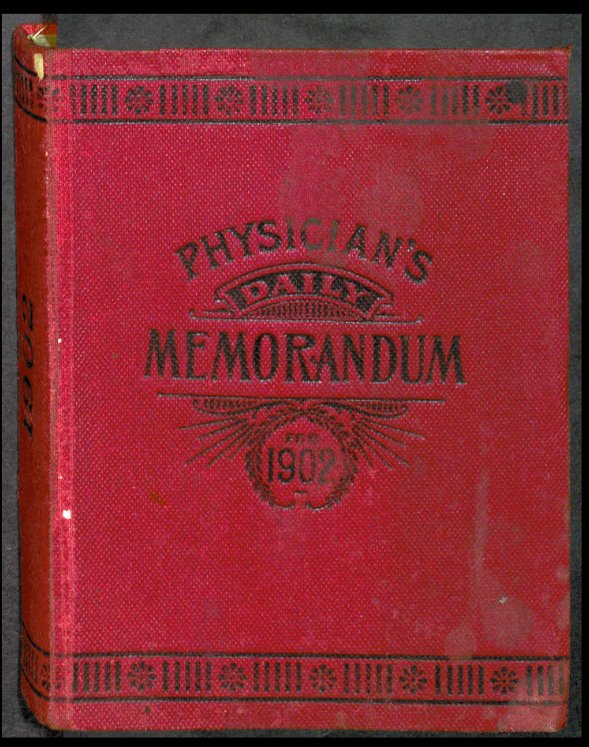
It is likely that Barber obtained her Physicians’ Daily Memorandum for 1902 from her husband. Perhaps Dr. Barber already had a notebook in which he kept his own calendar and had no need for the Memorandum.
His account books, held by the Sargeant Memorial Collection at the Norfolk Public Library, indicate that he used large lined volumes to keep track of his patients’ payments–whether in cash, or, as happened occasionally, eggs. Florence might have turned to the Physician’s Daily Memorandum out of convenience, or she might have liked its red, cloth-bound cover, its relatively small size, and the weight of its paper, the way her pencil glided over the page.
In the entry for January 1, Barber’s cursive script appears beneath the preprinted date at the top of the page and an additional line informing her that one day had passed in the year and 364 more were “to come.” Below that was a testimonial from someone named “Dr. S. American” from San Francisco, California. Dr. American explained that he had “prescribed Pepto-Mangan (Gude)” for many cases and found that it produced “invariably good results.” Barber’s entry does not interact with or acknowledge this testimonial in any way. But an analysis of the material diary can help us understand the world in which she lived, as a woman and the wife of a physician, as well as her use of the volume to maintain her diary.
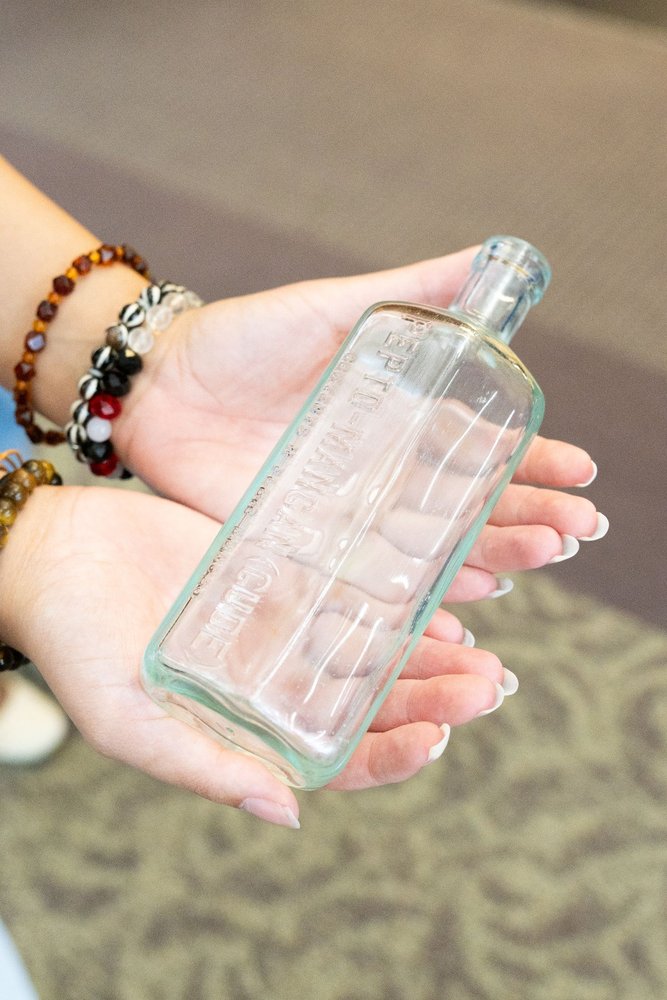
Pepto-Mangan (Gude), or more commonly, Gude’s Pepto-Mangan, was a patent medicine manufactured by a Dr. August Gude in Leipzig, Germany, and imported to the United States by Max J. Breitenbach. The medicine, which came in a distinctive six-sided glass bottle, was said to contain iron and manganese to build hemoglobin and stimulate the appetite. The advertisements in Barber’s diary testify to the ability of Gude’s Pepto-Mangan to help cure anemia, malaria, and dyspepsia (indigestion). It was regarded as especially effective in the treatment of women suffering from chlorosis (a particular type of anemia that was thought to affect adolescent girls) and amenorrhea (the absence of menstrual periods), or recovering from childbirth.
The Physicians Daily Memorandum for 1902 was intended as an advertisement for Gude’s Pepto-Mangan, a reminder of the medicine’s effectiveness every time a doctor wrote down an appointment or an account of his day. One after another, physicians attested to the value of the tonic, often commenting on the successful treatment of women patients. Although an advertisement would later claim that “Pepto-Mangan (Gude) Sells Itself,” Breitenbach went to great effort to distribute samples of the tonic and advertising materials like the Physician’s Handbook, and to place advertisements and testimonials in medical journals.
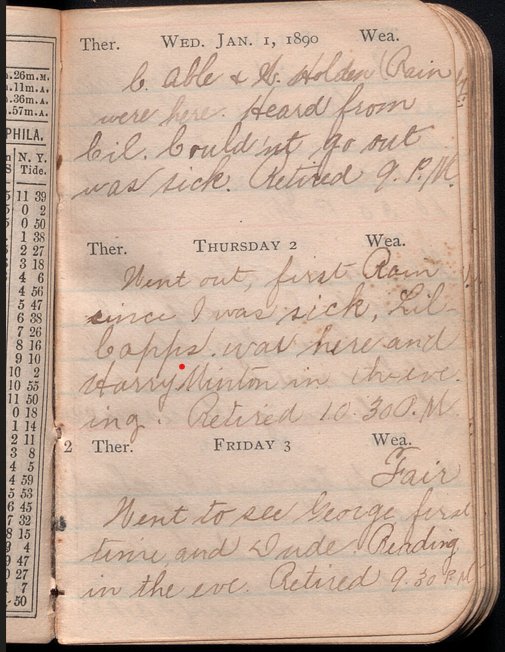
Like the preprinted diaries that were popular with many women diarists around the turn of the century, the Physician’s Daily Memorandum divided the year into daily increments, each page waiting to be filled. These volumes foster what diary scholar Jennifer Sinor calls the “diurnal contract”: the commitment to write every day. Writing one entry prompts the writing of another, day by day, until the year concluded and the volume was full. The next year’s volume asked for more of the same.
The Memorandum book provided Barber with an open space beneath the advertisements in which she could write the details of her day and inner life. Even though the size of this space depended on the length of the advertising material, she seems to have generally found it adequate. In twenty-seven entries, however, she wrote something in the margins of her page, sometimes concluding a thought but usually adding something new altogether. The entry for May 7, for example, is written beneath a lengthy, multi-page testimonial to the effectiveness of Gude’s Pepto-Mangan from Dr. Elizabeth A. Riley, superintendent of the Women’s Charity Club Hospital in Boston, Massachusetts (May 4). In her sloping, slightly messy handwriting, Barber notes:
Esther Circle. I did not go for it rained and Hailed in the evening in the morning was bright and hot. We cleaned the Hall. Girl came to work.
In the left margin and into the space at the top of the page, she adds, “received a letter from Jennie.” The placement of the word “work” on its own line, close to the center of the bottom of the page, indicates that she believed her entry to be concluded before hastening back to her diary to mark the arrival of her letter.
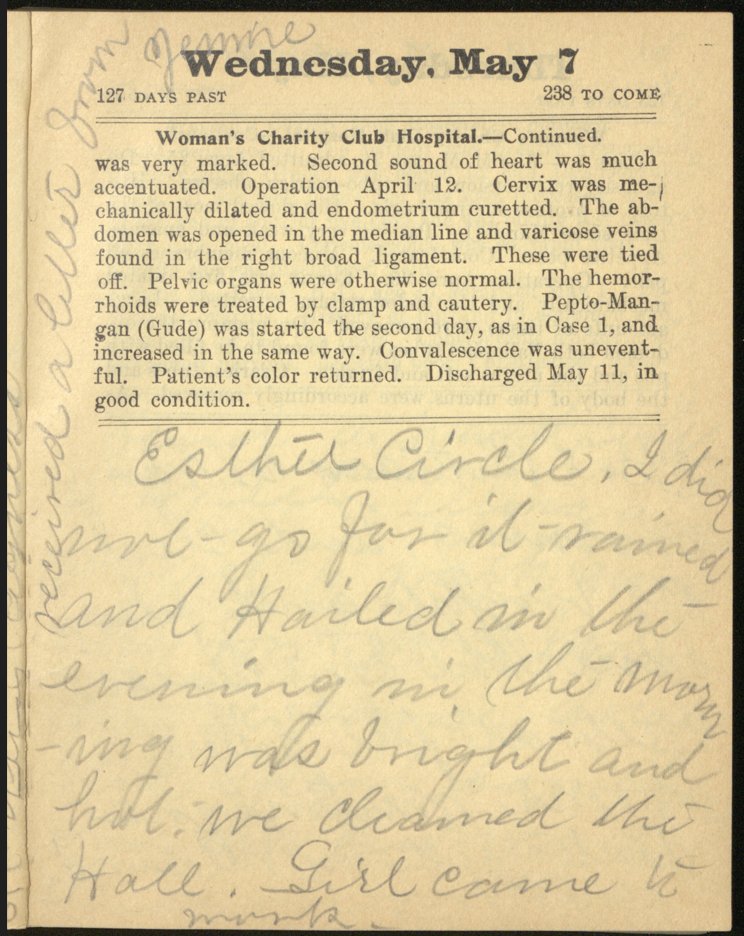
Like many nineteenth and early twentieth-century diarists, especially those who used preprinted diaries, Barber’s entries are relatively short and to the point–a recording of events, rather than the sort of introspective musing that modern readers often assume characterizes diary writing. They are also paratactic, meaning that short sentences (or sentence fragments) on unrelated topics sit side by side, making it difficult for us to discern what is really important. In the case of May 7, Barber writes about a meeting of the Esther Circle, Barber’s chapter of the Order of the Eastern Star, the women’s auxiliary to the Prince Hall Masons, as well as the weather and housework. All of these things matter to her and are worth documenting. It would be a mistake for us to dwell on one and ignore the others, or to focus on one entry and ignore the rest of the diary.
While we can’t know Florence Barber through her diary–that kind of intimacy is an illusion–we can appreciate the fullness of her life and her documentation of it.
Without her diary, we would know Florence Barber only as the wife of Dr. Philip Barber, the mother of Alma. While those roles were important to her, she was so much more than that–a friend, a teacher, an activist, a community member, a leader. We know these things because she documented her own life.
Glossary
- Amenorrhea
- The absence of menstrual periods.
- Chlorosis
- A particular type of anemia that was thought to affect adolescent girls.
- Clubwomen’s movement
- A wave of institution building, political organizing, and social gospel, beginning in the late nineteenth century and stretching into the early twentieth century.
- Diurnal contract
- Diary scholar Jennifer Sinor’s term for the commitment to write every day.
- Dyspepsia
- Indigestion.
- Esther Circle
- Barber’s chapter of the Order of the Eastern Star, the women’s auxiliary to the Prince Hall Masons.
- Grandfather clauses
- Exempting men whose grandfathers were able to vote prior to the Civil War from poll taxes and literacy tests.
- Paratactic
- Short sentences (or sentence fragments) on unrelated topics sit side by side, making it difficult for us to discern what is really important.
- Pepto-Mangan (Gude)
- A patent medicine manufactured by Dr. August Gude in Leipzig, Germany, and imported to the United States by Max J. Breitenbach, said to contain iron and manganese to build hemoglobin and stimulate the appetite.
Sources
- “Pepto-Mangan (Gude) Sells Itself,” American Druggist and Pharmaceutical Record, August 1, 1915, p. 78.
- Jennifer Sinor, The Extraordinary Work of Ordinary Writing: Annie Ray’s Diary. University of Iowa Press, 2002.