From page to screen
- 01
Transcribe
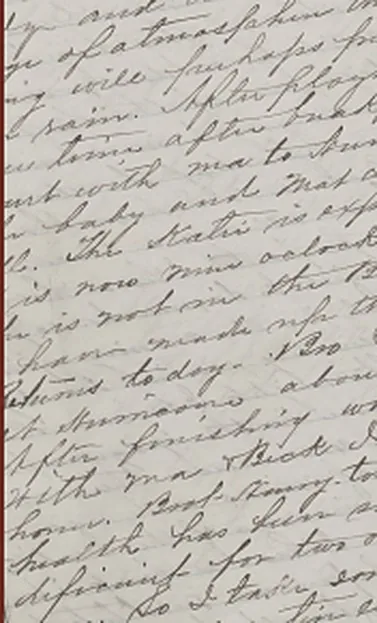
From the original manuscript, scans or photographs, exactly as written.
- 02
Annotate
Biographical notes for every person, plus notes on objects and events.
- 03
Review
Each transcription is checked by at least one other team member.
- 04
Encode
Marked up following the TEI P5 guidelines, then cross-checked.
- 05
Publish
A Co-Director reviews the full encoded transcript before it goes online.
Our policy in full
Each of the diaries included in the BWDP is transcribed by members of our team from either the original manuscript or digital scans or photographs of the original manuscript. We transcribe each diary as it appears on the page, using the diarist’s original punctuation, capitalizations, abbreviations, spelling and underlines, rather than making “corrections.” We believe that how a diarist writes tells as much as what they write about. As much as possible, we retain deletions and corrections. When the writing in a diary has faded, we have done our best to document punctuation and spelling. We have not, however, reproduced line breaks in the diaries unless they occur at the end of a paragraph. Neither do we represent hyphens at the end of lines. When a diarist writes in the margins, we transcribe her words and note their location on the original physical page.
We believe that how a diarist writes tells as much as what they write about.
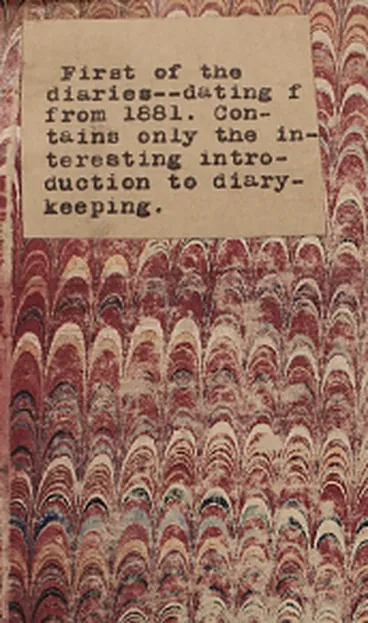
We attempt to represent the material diary page as accurately as possible in our transcription. That means that we transcribe all text written by publishers in pre-printed diaries. We include 400-600 dpi TIFFs of the diary page next to the transcription so users can view the material diary and get a better sense of how the diarist engaged with it. When we want the user to note something particular about the diarist’s use of a page, we include an annotation.
The team has also worked to identify every person mentioned in the diaries and provide them with a biographical note that appears on the project website. Each note also contains a list of other entries in which the person appears. For some people, we have a full biographical record, complete with birth and death dates, education, occupation, marriage, and the names of their children. At times we can only recover a few data points. When we are unsuccessful in our attempts, we indicate as much in the note. We also use annotations to provide information on objects and events mentioned in the diaries with which we anticipate our users may not be familiar.
Transcriptions and annotations are encoded using the most recent version of the Textual Encoding Initiative guidelines (TEI P5) according to best practices for the encoding of historical and literary texts. As with the original transcription, encoded documents are cross-checked by at least one other member of the team. At least one of the Project’s Co-Directors reviews the entire encoded transcript prior to publication on the site.